Recovery Is Now a Booked Appointment. What's Worth It?
Cold plunge, sauna, compression boots, red light — ranked by evidence versus price, so you know what's actually worth paying for and what isn't.
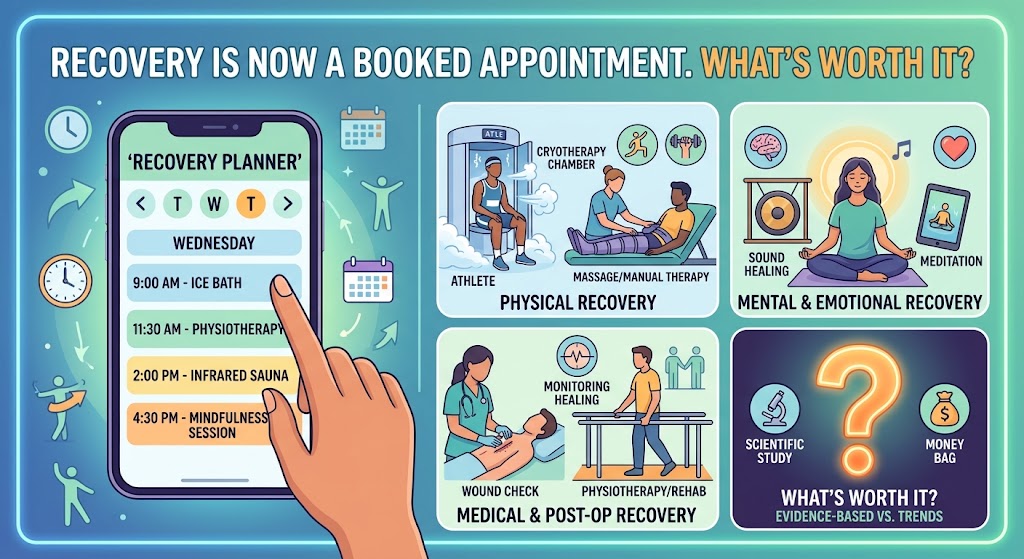
Cold plunge tubs, infrared saunas, compression boots, red light panels — recovery has quietly turned into an entire retail category, and by 2027 it's projected to keep growing fast as more gyms and wellness studios in India add these as paid add-ons. Some of it genuinely helps. A lot of it is expensive theatre. Here's an honest ranking, cheapest and most proven first.
Why recovery became a product category
For most of fitness history, "recovery" meant sleep, food, and rest days — free, unglamorous, and not particularly Instagrammable. Wearables gave recovery a number to chase, and once there's a number, there's a market for things that promise to move it. Boutique recovery studios are opening in every major Indian metro now, charging per session for cold plunge, sauna, or compression sessions the way a gym used to charge for a class.
None of this is inherently a scam — several of these tools have real, replicated evidence behind them. The problem is the pricing sits nowhere near the strength of the evidence, and the strongest, cheapest recovery tool in existence is the one nobody's selling a subscription for: sleep. Every product in this list should be evaluated as an addition on top of sleep, protein, and training load management — not a replacement for any of them.
Ranked by evidence versus price
- Sleep and protein timing — free, strongest evidence. Not a product, which is exactly why it's underrated. Consistent sleep and adequate protein intake outperform every device on this list for actual recovery, and cost nothing beyond what you're already spending on food.
- Active recovery (walking, light cycling, mobility work) — free to low-cost, strong evidence. Genuinely effective at reducing soreness and maintaining blood flow to recovering muscle, and available to literally everyone.
- Compression boots (NormaTec and similar) — moderate cost, moderate evidence. Solid evidence for reducing the subjective feeling of soreness and improving perceived recovery, less clear evidence that it changes underlying muscle repair speed. Reasonable if you're already spending on recovery and enjoy it — not essential.
- Percussion massage guns — low-to-moderate cost, moderate evidence. Similar story to compression boots: real short-term reduction in soreness and improved range of motion, weaker evidence it accelerates actual tissue repair. A decent budget pick if you want something tangible.
- Sauna — moderate cost, promising but still-developing evidence. Some research links regular sauna use to cardiovascular benefits and possibly better long-term training adaptation, but much of it comes from smaller studies. Enjoyable and plausibly useful; not something to prioritise over sleep or protein.
- Cold plunge — moderate-to-high cost, mixed evidence, one real caveat. Feels good, may reduce short-term soreness — but several studies suggest cold exposure immediately after a strength-training session can blunt the muscle-building signal from that workout. If your goal is muscle gain, cold plunge is arguably better used on rest days or well after training, not right after lifting.
- Red light therapy panels — high cost relative to evidence, promising but early. Some legitimate research interest, particularly for localized tissue effects, but the evidence base for whole-body recovery is thin relative to what panels cost, and much of the commercial marketing runs well ahead of what's actually been shown.
A real example
Karan, 29, Bangalore, joined a boutique recovery studio near his office in early 2026 — ₹1,500 a session for cold plunge plus infrared sauna, going twice a week. Six weeks in, he wasn't sleeping any better and his lifts hadn't moved, because he was still averaging under six hours of sleep a night and skipping breakfast most days. When his coach pointed out he was spending more on recovery sessions monthly than on the food that would have actually driven the recovery he wanted, he cut the studio visits to once a week, redirected some of that budget to actually eating enough protein, and fixed his sleep window. His soreness complaints dropped and his lifts started moving again within a month — not because the cold plunge stopped working, but because it had never been the bottleneck.
The most effective recovery tool costs nothing and nobody's selling it to you: seven-plus hours of consistent sleep.
How to prioritise if you're on a budget
- Fix sleep consistency first — same wake time daily matters more than total hours in isolation, though both matter.
- Hit your protein target every day before spending on any recovery product — this is the actual raw material for repair.
- Add walking or light movement on rest days before adding anything that costs money.
- If you have budget left after the above, a massage gun or occasional compression session is a reasonable, low-cost "nice to have."
- Sauna and cold plunge are fine as enjoyable extras once the basics are locked in — treat them as a wellness choice, not a performance necessity.
- Red light therapy is the one to be most skeptical of relative to its price tag — it's the newest, least-proven, and typically most expensive per session.
Ice bath at home versus a studio cryotherapy chamber
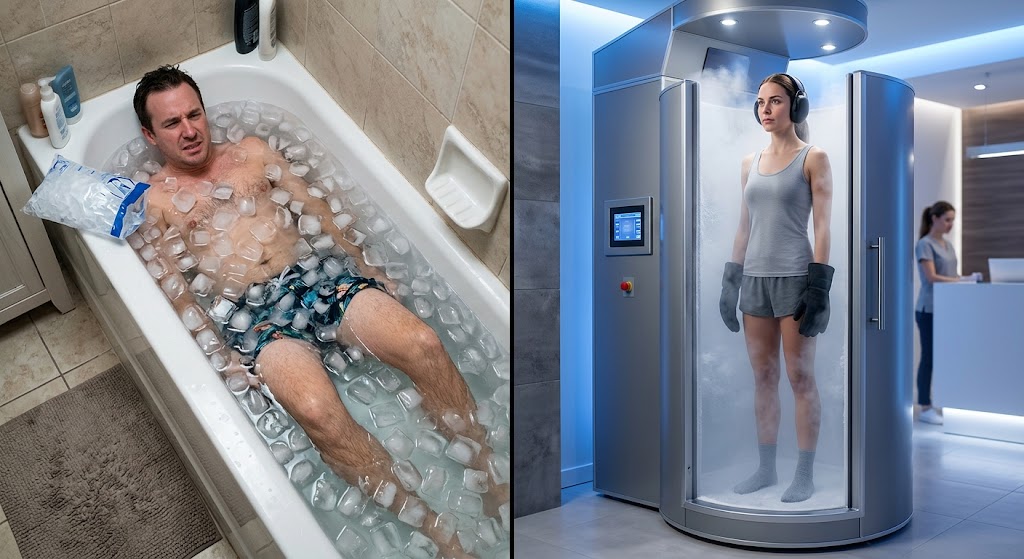
Two very different price points get lumped together under "cold therapy," and they're not equivalent. A home ice bath or tub — even a basic DIY version with ice bags and a large tub — delivers the same core mechanism as a commercial cold plunge tub at a fraction of the cost, just with more manual effort to maintain temperature. Whole-body cryotherapy chambers (the ones using cold air rather than water, often found in premium studios) are considerably more expensive per session and, despite the more high-tech feel, don't have clearly stronger evidence behind them than a simple cold water immersion — the core benefit both are chasing is the same cold-exposure response, not the delivery method. Unless you specifically enjoy the studio experience or the convenience, a home ice bath gets you most of the same effect for a fraction of the ongoing cost.
Common mistakes people make with recovery products
- Buying recovery tools while sleep and protein are still inconsistent. Fix: audit sleep and protein for two weeks before adding any paid recovery product — most people find the "recovery problem" was actually a basics problem.
- Cold plunging immediately after a hypertrophy-focused lifting session. Fix: if muscle growth is the goal, separate cold exposure from training by several hours, or save it for rest days.
- Assuming expensive means effective. Fix: price and evidence strength aren't correlated in this category — the ranked list above is a better guide than the price tag.
- Using a recovery session as a substitute for an actual rest day. Fix: a sauna or massage-gun session on top of a packed training week doesn't replace a full rest day; it's an addition, not a swap.
- Chasing a wearable's recovery score with a product instead of a behaviour change. Fix: check whether sleep timing, alcohol, or stress explains a poor score before reaching for a device to fix it.
How to know it's working
- Subjective soreness after hard sessions is manageable within 24-48 hours, not lingering for days.
- Sleep is consistent most nights, not just occasionally good.
- Training performance (weights, reps) is trending flat-to-up, not declining despite "doing more recovery."
- You're not spending more on recovery products monthly than you're confident is improving your actual training output.
- You'd keep doing whatever recovery routine you have even if no wearable were tracking it — a sign it's genuinely helping, not just feeding a score.
FAQ
Is a cold plunge worth it if I mainly want to build muscle? Time it carefully if so — using it right after strength training may blunt some of the muscle-building response to that session. Using it on rest days or well-separated from training avoids that concern while still giving the subjective recovery benefit.
What's the single best recovery purchase under ₹5,000? A decent percussion massage gun is a reasonable pick — real short-term soreness relief, one-time cost, no recurring subscription, and it doesn't carry the timing caveat cold plunge does.
Do I need any of these products if I'm just training 3 days a week casually? Honestly, probably not. At lower training frequencies, sleep, protein, and a rest day between sessions cover almost all of what these products are trying to accelerate. Recovery products earn their place at higher training volumes, not casual 3-day splits.
Putting it together
- Track your sleep and protein for two weeks before buying anything new in this category.
- If both are already solid and you have budget left, start with the cheapest, best-evidenced options — active recovery, then a massage gun.
- If you want to try cold plunge or sauna, treat them as enjoyable extras and time cold exposure away from strength-training days if muscle gain matters to you.
- Set a monthly cap on recovery spending and compare it honestly against what you're spending on food.
- Reassess in a month — did soreness, sleep, or lifts actually move, or just the number on an app?
Recovery products can genuinely help once the fundamentals are handled — they're just rarely the fastest fix for someone whose sleep or protein still needs work. If you want a plan that gets those fundamentals right first, our 12-week program builds training, nutrition, and recovery guidance around your actual schedule, with a coach on WhatsApp to help you figure out what's actually worth paying for.