How Much Water Should You Drink a Day? The Honest Answer
The 8-glasses rule has no real scientific basis. Here is how much water you should actually drink a day, how to tell if you're hydrated in five seconds, and whether drinking water helps you lose weight.
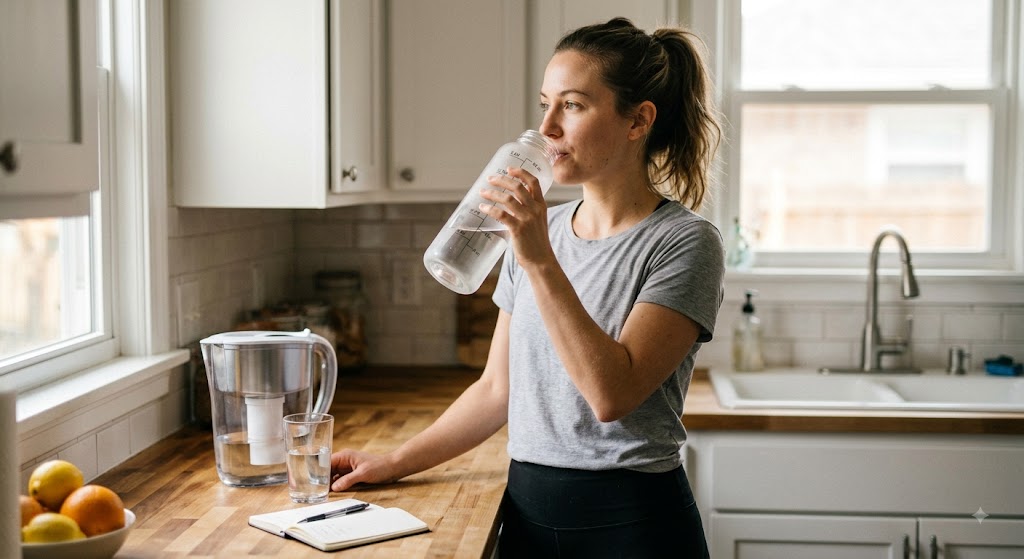
How much water should you drink a day? You've almost certainly heard "eight glasses." That rule has no strong scientific origin — it's widely traced back to a 1945 recommendation that also noted most of that water comes from food, a line that got dropped as the advice was repeated.
The real answer is more useful and less rigid: your daily water intake depends on your body size, activity level, climate, and diet. Here's how to find your number and how to know, in five seconds, whether you're actually hydrated.

How Much Water Should You Drink a Day?
The most commonly cited guidance comes from national health authorities and covers total water from all sources — drinks and food combined:
- Men — about 3.7 litres (125 oz) of total water per day
- Women — about 2.7 litres (91 oz) of total water per day
The important detail everyone misses: roughly 20% of that comes from food. Fruit, vegetables, soup, yoghurt, rice, and dal all carry significant water. So the amount you actually need to drink is closer to:
- Men — around 3 litres (13 cups) of fluid
- Women — around 2.2 litres (9 cups) of fluid
A simpler rule that scales to your body: 30–35 ml per kg of body weight. A 70 kg person lands at 2.1–2.5 litres a day.
When You Need More Water
- Exercise — add 400–800 ml per hour of training, more in heat
- Hot or humid climates — sweat losses rise sharply
- High-protein diets — protein metabolism increases water needs
- Illness — fever, vomiting, and diarrhoea all accelerate fluid loss
- Altitude — above ~2,500 m, breathing and urination both increase water loss
- Pregnancy and breastfeeding — needs rise meaningfully; follow your doctor's guidance
The 5-Second Hydration Check
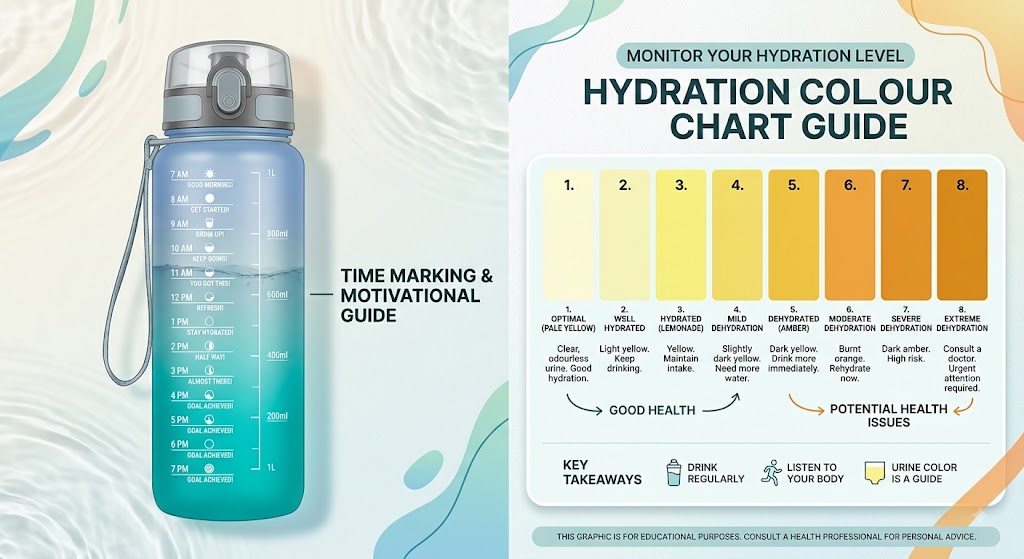
Forget counting glasses. Check your urine colour — it's the most practical hydration indicator available:
- Pale straw / light yellow — well hydrated. This is the target.
- Clear and colourless — you're likely drinking more than you need. Not dangerous for most people, but unnecessary.
- Dark yellow — drink now.
- Amber or darker — meaningfully dehydrated. If it persists despite drinking, see a doctor.
Does Drinking Water Help You Lose Weight?
Yes, modestly — and through mechanisms that are less exciting than the internet suggests, but genuinely useful.
- It fills your stomach. Studies have found that drinking around 500 ml of water before meals leads to lower calorie intake at that meal and greater weight loss over time.
- It replaces liquid calories. Swapping two sugary drinks a day for water removes 250–400 calories with zero change to your food.
- It prevents confusion between thirst and hunger. Mild thirst is often misread as a snack craving.
- Very small thermogenic effect. Your body uses a little energy warming cold water — real, but too small to matter.
What water does not do is burn fat or "flush out" fat. Weight loss still requires a calorie deficit. Water makes staying in one easier.
Signs You're Not Drinking Enough Water
- Dark urine, or urinating fewer than 4 times a day
- Persistent afternoon fatigue and poor concentration
- Headaches with no other obvious cause
- Dry mouth and lips
- Dizziness on standing
- Noticeably worse gym performance — even 2% dehydration measurably reduces strength and endurance
Can You Drink Too Much Water?
How to Actually Drink More Water
- One glass on waking — you've gone 7–8 hours without fluid
- A bottle on your desk — visibility is most of the battle
- One glass before every meal — hydration plus appetite control in one habit
- Flavour it — lemon, mint, cucumber, or a slice of ginger if plain water bores you
- Drink around training — 500 ml in the two hours before, and sip throughout
FAQ
How much water should I drink a day to lose weight?
There's no special weight-loss amount — normal hydration is enough, around 2.2 litres for women and 3 litres for men from drinks. The useful habit is drinking about 500 ml before meals, which has been shown to reduce calorie intake at that meal and improve weight-loss results.
Is 8 glasses of water a day accurate?
It's a rough approximation, not a scientific rule. Eight 250 ml glasses is 2 litres, which is close to what an average woman needs from fluids, but too little for a large or active man and more than a small sedentary person needs. Body weight and activity are far better guides.
Do tea and coffee count toward daily water intake?
Yes. The mild diuretic effect of caffeine doesn't outweigh the fluid the drink provides, so tea, coffee, milk, and juice all contribute to your daily total. Water is still the better default because it has no calories.
What are the signs of dehydration?
Dark yellow urine, urinating fewer than four times a day, dry mouth, headache, afternoon fatigue, dizziness on standing, and reduced training performance. Urine colour is the quickest and most reliable everyday check.
How much water should I drink per kg of body weight?
About 30–35 ml per kilogram of body weight per day is a practical guideline — roughly 2.1–2.5 litres for a 70 kg adult. Add 400–800 ml for each hour of exercise, and more in hot weather.
Can drinking too much water be dangerous?
Rarely, but yes. Consuming very large volumes quickly can dilute blood sodium (hyponatremia), which is a medical emergency. It's largely confined to endurance events and drinking challenges. Spreading intake through the day avoids any risk.
Where to Go From Here
Hydration is the easy part — the rest takes a plan. Tracqfit builds your calorie, protein, and training targets from your own numbers and keeps them updated as your body changes.