Whey Protein for Beginners: Benefits, Side Effects and How to Use It
Whey protein isn't a steroid, it won't damage healthy kidneys, and you don't need it to build muscle. Here's what it actually does, how much to take and how to pick a genuine one.
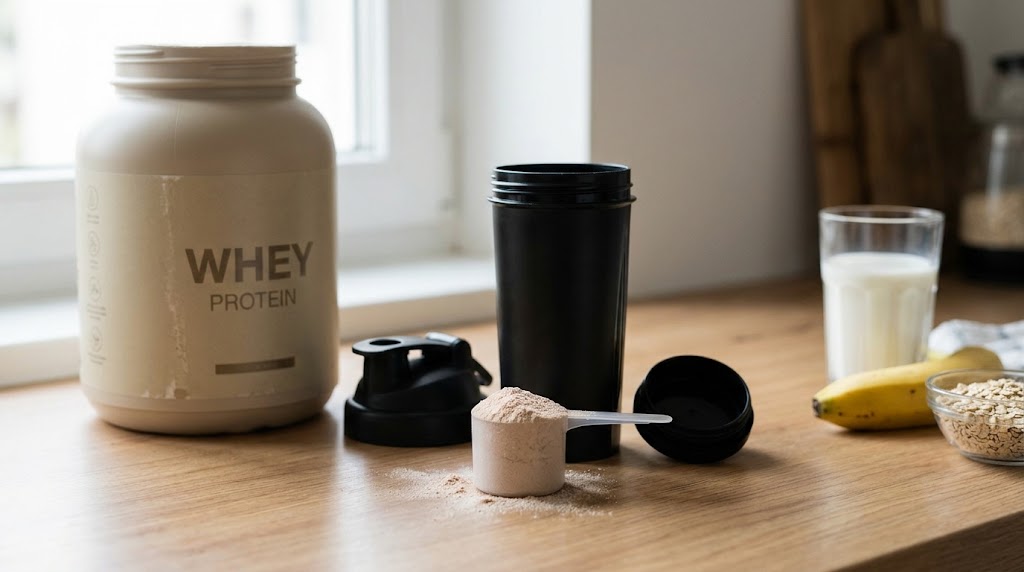
Walk into any gym in India and someone will tell you whey protein is essential. Walk into a family dinner and someone will tell you it's a steroid that ruins your kidneys. Neither is true. Whey protein is simply milk protein in powder form — a convenient way to hit your daily protein target. This beginner's guide covers what whey protein does, whether it's safe, which type to buy, how much to take and how to avoid the fake products that flood online marketplaces.
What is whey protein?
When milk is turned into paneer or cheese, it separates into solid curds and a watery liquid. That liquid is whey. It's filtered and dried into a powder that's typically 70–90% protein.
Whey protein is a food, not a drug. It contains all nine essential amino acids, digests quickly, and is especially rich in leucine — the amino acid that switches on muscle building after a workout. Nutritionally, one scoop is similar to eating about 100 g of chicken breast or four egg whites' worth of protein.
Do you actually need whey protein?
No. You can build muscle and lose fat on food alone. Whey is useful when:
- You struggle to reach 1.2–2 g of protein per kg of body weight from meals
- You're vegetarian and can't comfortably eat enough paneer, dal and curd every day
- You need a quick, portable protein option after training or at work
- You're losing weight and want a filling, low-calorie snack
If you already hit your target easily, whey adds convenience, not magic. Not sure what your target is? Read how much protein you need daily or plug your numbers into our calorie and macro planner.
Whey protein benefits
- Builds and keeps muscle when combined with strength training
- Keeps you full, which helps you stay in a calorie deficit
- Fast and easy — 25 g of protein in 30 seconds with no cooking
- Low in fat and carbs, so it fits almost any diet
- Helps recovery after hard training when your meals are far apart
Is whey protein safe? Common myths
Myth: whey protein is a steroid. False. Steroids are synthetic hormones. Whey is a dairy protein — chemically closer to paneer than to any drug.
Myth: whey protein damages your kidneys. In healthy adults, research has not found that high-protein diets harm kidney function. If you already have kidney disease, or diabetes or high blood pressure that affects your kidneys, your doctor may want to limit protein — check with them before using any protein supplement.
Myth: whey protein causes hair loss. There's no good evidence that protein itself causes hair loss. Some cheap products have been found to contain added steroids or banned ingredients, which is one more reason to buy genuine, tested brands.
Myth: whey protein makes you fat. One scoop is about 110–130 calories. It only causes weight gain if it pushes your total calories above what you burn — like any food.
Possible side effects
Most people tolerate whey well. The common issues are:
- Bloating, gas or loose stools — usually lactose sensitivity. Switch to whey isolate, which has very little lactose.
- Acne — some people notice breakouts with dairy. Try reducing the dose or switching to a plant protein.
- Stomach upset from sweeteners — some flavoured powders use sugar alcohols. Try an unflavoured or differently sweetened version.
Whey concentrate vs isolate vs blends
| Type | Protein per scoop | Lactose | Price | Best for |
|---|---|---|---|---|
| Whey concentrate | 70–80% | Some | Lowest | Most beginners with no dairy issues |
| Whey isolate | 85–90%+ | Very low | Higher | Lactose sensitivity, strict diets |
| Blend (concentrate + isolate) | 75–85% | Low–moderate | Middle | Balance of price and digestion |
| Mass gainer | 15–30% | Varies | Varies | Not a protein supplement — mostly sugar |
For most beginners, a plain whey concentrate or a blend is all you need. Isolate is worth the extra cost only if regular whey upsets your stomach. And a "mass gainer" isn't whey protein at all — it's mostly carbohydrates. If you're trying to gain weight, a homemade shake is usually better; see how to gain weight the healthy way.
How much whey protein should you take?
Start with one scoop (about 25–30 g of powder, roughly 20–25 g protein) a day. Two scoops is fine if your meals are low in protein. There's rarely a reason to go higher — food should still provide most of your protein.
Think of whey as a top-up: work out your daily target, see how much you get from meals, and use whey to fill the gap.
When to drink whey protein
The "30-minute anabolic window" after a workout is far less important than once thought. What matters most is your total protein across the day. That said, these times work well:
- After a workout — convenient, and your muscles are primed to use it
- At breakfast — most Indian breakfasts (poha, upma, idli, toast) are low in protein
- As an evening snack — stops you arriving at dinner starving
- Before bed — fine if it helps you hit your target, though casein or a glass of milk digests more slowly
How to mix whey protein
- With water: fewer calories — best for fat loss
- With milk: extra 8 g protein and creamier taste — good for weight gain
- In food: stir into oats, curd, smoothies or even besan chilla batter
A simple fat-loss shake: 1 scoop whey, 250 ml water or toned milk, a pinch of cinnamon and ice. About 150–230 calories and 25–33 g protein.
How to spot fake whey protein
Counterfeit supplements are a real problem in India, especially on marketplaces and at discount stores. Protect yourself:
- Buy from the brand's own website or its authorised sellers
- Check for an FSSAI licence number on the label
- Look for a batch number and a way to verify authenticity (QR code or scratch code)
- Prefer brands that publish third-party lab test reports
- Be suspicious of prices far below the market rate
- Check the powder: it should dissolve reasonably well and taste the same every time
Whey protein is milk protein in a tub. Use it to fill the gap in your diet — not to replace real meals.
FAQ
Is whey protein good for beginners? Yes, if you struggle to get enough protein from food. Whey is a safe, convenient dairy protein for healthy adults. Beginners should start with one scoop a day alongside a regular strength-training routine and balanced meals.
Is whey protein safe for kidneys? Studies in healthy adults have not shown that whey or high-protein diets damage the kidneys. People with existing kidney disease, or conditions that affect the kidneys like uncontrolled diabetes, should talk to their doctor before taking any protein supplement.
Can I take whey protein without working out? You can — it's a food. It still helps you reach your protein target and stay full, which supports weight loss. But you'll only build meaningful muscle if you also do some form of strength training.
Can women take whey protein? Yes. Whey is not a male-only or hormone product, and it won't make women bulky. It's very useful for women trying to lose fat while keeping muscle, especially vegetarians who find it hard to reach their protein target.
Is whey protein better than eggs or chicken? Not better — just more convenient. Whole foods also give you vitamins, minerals and fibre. Use whey to fill the gaps, and keep eggs, chicken, fish, paneer, dal and curd as the base of your diet.
Your 30-day whey protein starter plan
- Week 1 — calculate your daily protein target and track how much you get from food
- Week 2 — add one scoop of whey a day to fill the gap, at whatever time is easiest
- Week 3 — check digestion; switch to isolate if you're bloated or gassy
- Week 4 — review: are you hitting your protein target most days and getting stronger in the gym?
Whey protein is one of the few supplements that's genuinely useful — but only when the basics are in place. If you'd like a coach to set your protein target, build Indian meals around it and tell you exactly when a supplement is worth it, check out our coaching programs.