How to Gain Weight Fast (the Healthy Way) If You're Naturally Skinny
Eating "a lot" isn't working because you're not eating as much as you think. Here's the 6-step plan to gain healthy weight as a skinny person — with an Indian sample day.
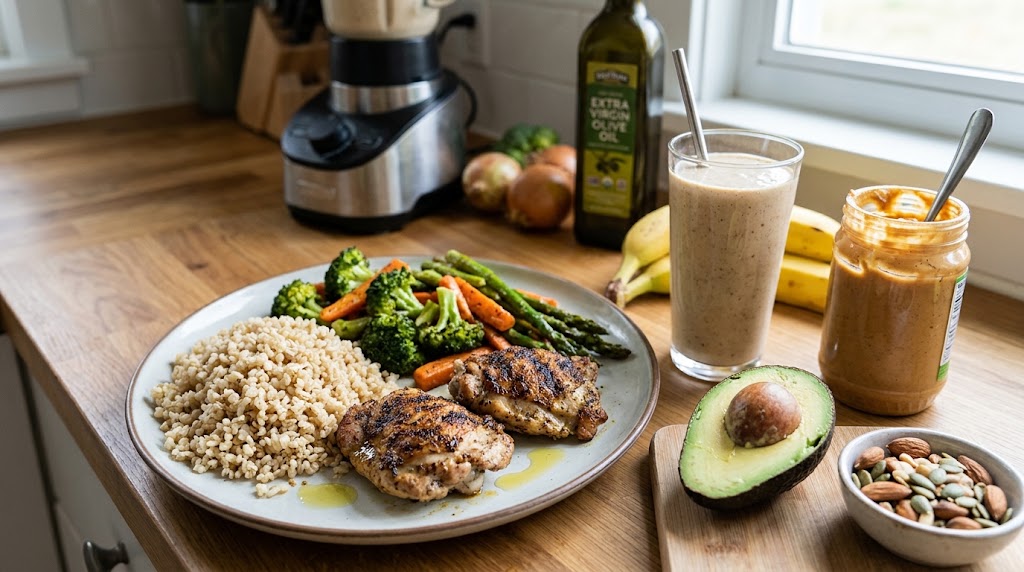
If you've been told "just eat more" and the scale still hasn't moved, you're not alone. Most naturally skinny people genuinely believe they eat a lot — and most of them are eating 300–600 calories a day less than their body needs to grow. The good news: learning how to gain weight is a lot more predictable than losing it. Get a small calorie surplus, enough protein and a simple lifting routine, and 2–3 kg a month is realistic for most beginners.
Why you can't gain weight (even though you eat a lot)
Being "hardgainer" skinny is rarely about a magical fast metabolism. It's usually a mix of three things:
- You eat big meals but not every day. One huge Sunday lunch doesn't cancel out three days of skipped breakfasts.
- You fill up on low-calorie foods. Lots of vegetables, salads, soups and water before meals make you full on very few calories.
- You move more than you think. Restless, active people can burn several hundred extra calories a day through walking, fidgeting and standing — this is called NEAT (non-exercise activity).
To gain weight you must eat more calories than you burn, consistently, every day. There's no supplement, food or "weight gainer" that gets around that rule.
Step 1: Find your calorie target
Start with your maintenance calories — what you burn on a normal day. Our free BMR & TDEE calculator will give you a good estimate in a minute.
Then add a surplus:
| Goal | Daily surplus | Expected gain |
|---|---|---|
| Lean, slow gain | +250 kcal | ~1 kg per month |
| Standard gain (most people) | +300–500 kcal | 1.5–2.5 kg per month |
| Very underweight (BMI under 17) | +500–700 kcal | 2.5–3 kg per month |
A bigger surplus isn't better. Beyond about 500 extra calories a day, a growing share of what you gain is fat rather than muscle. If you're not sure where you stand, check your range with our ideal weight calculator first.
Step 2: Eat enough protein to turn food into muscle
Calories make the scale move; protein decides how much of that weight is muscle. Aim for 1.6–2 g of protein per kg of body weight each day. A 55 kg person needs roughly 90–110 g.
Spread it across 4 meals of 25–35 g each rather than one big serving. Easy Indian sources:
- Paneer (100 g ≈ 18 g protein)
- Eggs (1 whole egg ≈ 6 g)
- Chicken breast (100 g cooked ≈ 31 g)
- Curd or Greek yoghurt (200 g ≈ 8–20 g, depending on type)
- Soya chunks (50 g dry ≈ 26 g)
- Dal, rajma and chana (1 cup cooked ≈ 12–15 g)
For a full list, see how much protein you need to build muscle.
Step 3: Make calories easy to eat
Your biggest problem isn't knowing what to eat — it's getting it down when you're already full. Use these tricks:
- Eat 4–5 times a day instead of 2–3 big meals
- Drink some of your calories — milkshakes and smoothies don't fill you up like solid food
- Add calorie-dense extras: a spoon of ghee on rice, peanut butter on toast, a handful of nuts with chai
- Eat your protein and carbs first, vegetables last
- Keep ready-to-eat snacks around: bananas, dates, roasted chana, peanut chikki, trail mix
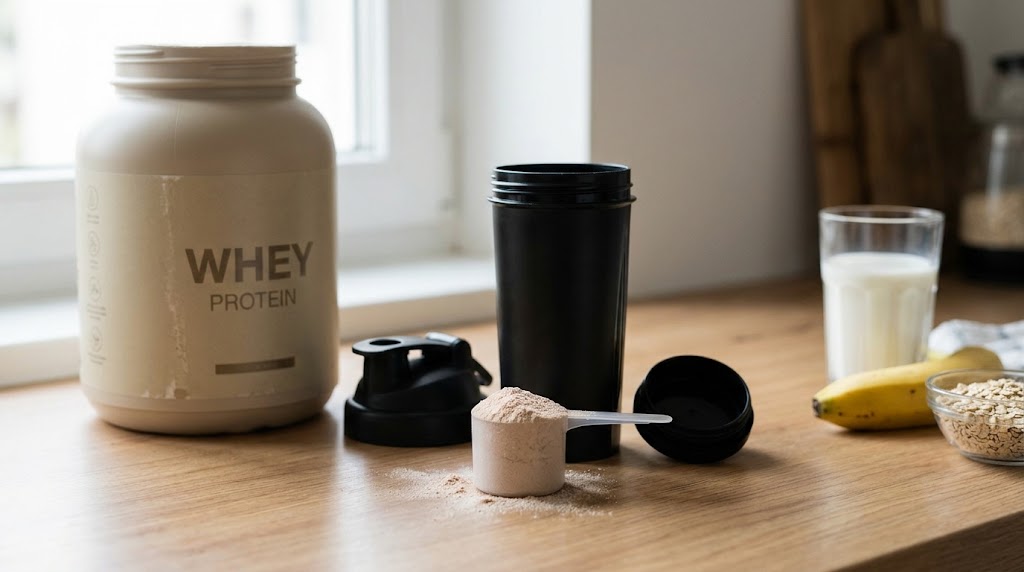
The 600-calorie shake: 300 ml full-fat milk, 1 banana, 2 tbsp peanut butter, 3 tbsp oats and 1 tbsp honey. Blend for 30 seconds. That one glass adds about 600 calories and 20 g of protein, and most skinny people can drink it even when they're not hungry.
Step 4: Lift weights 3–4 times a week
Without training, a calorie surplus mostly becomes fat. With training, a good chunk becomes muscle — which is the "healthy weight" you actually want.
You don't need a fancy plan. Three full-body sessions a week built on compound exercises is ideal for beginners:
- Squats or leg press
- Push-ups or bench press
- Rows or lat pulldown
- Romanian deadlifts
- Overhead press
- Plank
Do 3 sets of 8–12 reps and try to add a little weight or a rep each week. That rule — called progressive overload — is what makes muscles grow. If you're brand new, start with our beginner strength training split.
Keep cardio light: daily walks are fine, but long runs or hours of football will burn the surplus you worked hard to eat.
Step 5: Sleep 7–9 hours
Muscle is built while you recover, not while you train. Short sleep raises stress hormones, lowers appetite the next day and reduces how much protein your body turns into muscle. If you're training hard and eating well but sleeping 5 hours a night, sleep is your bottleneck.
Step 6: Track your weight and adjust every 2 weeks
Weigh yourself 3–4 mornings a week, after the toilet and before eating, and look at the weekly average. Then follow this rule:
- Gaining 0.25–0.75 kg a week: perfect, change nothing
- Gaining nothing for 2 weeks: add 200 calories a day (one extra glass of milk and a banana)
- Gaining over 1 kg a week after the first month: cut back by 150–200 calories
The first week often shows a quick 1–2 kg jump. That's mostly extra food, water and glycogen in your muscles — it's normal, don't panic.
Indian sample day for weight gain (~2,800 kcal)
| Meal | What to eat | Approx. kcal | Protein |
|---|---|---|---|
| Breakfast | 3 eggs or paneer bhurji, 2 parathas, 1 glass milk | 750 | 32 g |
| Mid-morning | Banana + handful of almonds and peanuts | 350 | 9 g |
| Lunch | 1.5 cups rice, dal, chicken or rajma curry, curd, salad | 750 | 35 g |
| Evening | The 600-calorie shake | 600 | 20 g |
| Dinner | 3 rotis with ghee, paneer or fish curry, sabzi | 650 | 30 g |
Vegetarian? Swap eggs and chicken for paneer, soya chunks, tofu and extra dal — the calories and protein are easy to match. You can scale the whole day up or down with our calorie and macro planner.
Eat a little more than feels comfortable, lift a little heavier every week, and sleep. That's the whole secret.
Common weight gain mistakes
- Living on junk food — fix: get most calories from real meals; treats are fine as extras, not the base
- Buying a "mass gainer" before fixing meals — fix: a homemade shake does the same job for a fraction of the price
- Skipping breakfast — fix: even a glass of milk with a banana and peanut butter counts
- Training without progressive overload — fix: write down your weights and beat them
- Giving up after two weeks — fix: judge progress over 6–8 weeks, not days
When to see a doctor
If you're eating well above your target for over a month and still losing weight, or you have symptoms like constant thirst, frequent urination, a racing heart, diarrhoea or extreme tiredness, get checked. An overactive thyroid, diabetes, gut problems and some infections can all cause unexplained weight loss and need medical treatment, not more food.
FAQ
How can a skinny person gain weight fast? Eat 300–500 calories a day above your maintenance level, get 1.6–2 g of protein per kg of body weight, and lift weights 3–4 times a week. Most beginners gain 1.5–3 kg a month this way. Drinking a high-calorie milkshake daily is the easiest way to add the extra calories.
How many kg can I gain in a month? 1–3 kg a month is a healthy pace for most people, with very underweight beginners at the top of that range. More than that is usually mostly fat and water rather than muscle.
Which food is best for weight gain? Calorie-dense whole foods: full-fat milk, curd, paneer, eggs, peanut butter, nuts, bananas, dates, rice, potatoes, oats and ghee. Combine them with a protein source at every meal so the weight you gain includes muscle.
Do I need a weight gainer supplement? No. Weight gainers are mostly sugar and protein powder. A homemade shake with milk, banana, peanut butter and oats gives similar calories with better nutrition. If you struggle to hit protein, a plain whey protein is more useful than a mass gainer.
Can I gain weight without going to the gym? You can gain weight from food alone, but more of it will be fat. Home workouts like push-ups, squats, lunges and resistance band rows still build muscle for beginners — just make them harder every week.
Your 30-day weight gain plan
- Week 1 — calculate your maintenance, add 300–500 calories and eat 4–5 times a day
- Week 2 — start three full-body workouts a week and log every weight you lift
- Week 3 — check your weekly average weight; add 200 calories if it hasn't moved
- Week 4 — review: aim for 1–2 kg up, lifts going up, and 7+ hours of sleep a night
Healthy weight gain is boring in the best way: the same meals, the same workouts, done consistently. If you'd like a coach to set your calories, write an Indian meal plan around foods you like and adjust it every week on WhatsApp, take a look at our coaching programs.