How to Lose Belly Fat: What Actually Works (and What Doesn't)
There is no exercise that burns belly fat directly. But belly fat does come off in a predictable order once you get four things right. Here is exactly how to lose belly fat, backed by how fat loss actually works.
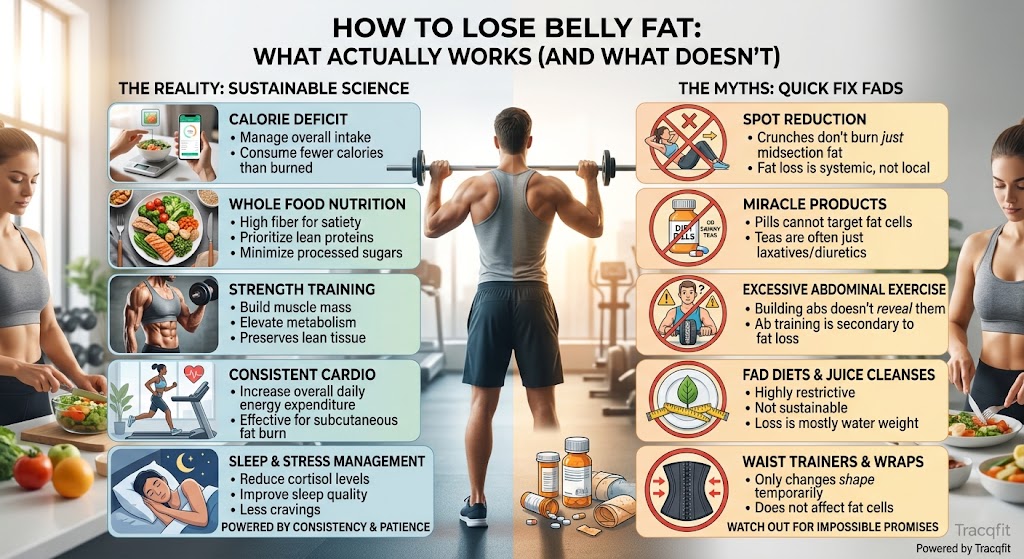
If you want to know how to lose belly fat, the honest answer starts with something most articles won't tell you: you cannot burn belly fat directly. No amount of crunches, no waist trainer, and no fat-burning tea will pull fat off your stomach specifically.
Belly fat comes off the same way all fat does — through a calorie deficit — and it comes off in the order your body decides, not the order you'd prefer. The good news is that once you understand that, losing belly fat becomes a straightforward, repeatable process rather than a guessing game.
This guide covers what actually works to lose belly fat, what to ignore, the best exercises for belly fat, and how long it realistically takes.

Why You Can't Target Belly Fat (Spot Reduction Is a Myth)
Spot reduction — the idea that training a body part burns the fat sitting on top of it — has been tested repeatedly and it does not hold up. Studies on people training one limb intensively show no meaningful difference in fat loss between the trained and untrained side.
Here's why: when your body needs energy, it releases fat from fat cells all over the body into the bloodstream. Working your abs does not tell your body to take that energy from your stomach. It just makes your abs stronger.
So crunches build abdominal muscle. They do not remove abdominal fat. If you do a thousand crunches under a layer of belly fat, you get stronger abs under a layer of belly fat.
The Two Types of Belly Fat (This Part Matters)
Not all belly fat is the same, and the difference affects both your health and how fast it comes off.
- Subcutaneous fat — the soft fat directly under the skin that you can pinch. It's the last to go for most people and it's largely a cosmetic concern.
- Visceral fat — the deeper fat packed around your organs, which makes the belly feel firm and pushed out. This is the one linked to insulin resistance, heart disease, and type 2 diabetes.
How to Lose Belly Fat: The Four Things That Actually Work
1. Get Into a Calorie Deficit
This is the entire mechanism. To lose belly fat, you must consume fewer calories than you burn. Everything else on this list either supports the deficit or protects your muscle while you're in one.
- Find your maintenance calories with the BMR & TDEE Calculator
- Subtract 400–600 calories per day
- Target 0.5–1% of your body weight lost per week
- Never drop below 1,200 kcal (women) or 1,500 kcal (men)
If the concept is new to you, read Calorie Deficit Explained — it's the single most useful thing to understand about fat loss.
2. Eat Enough Protein
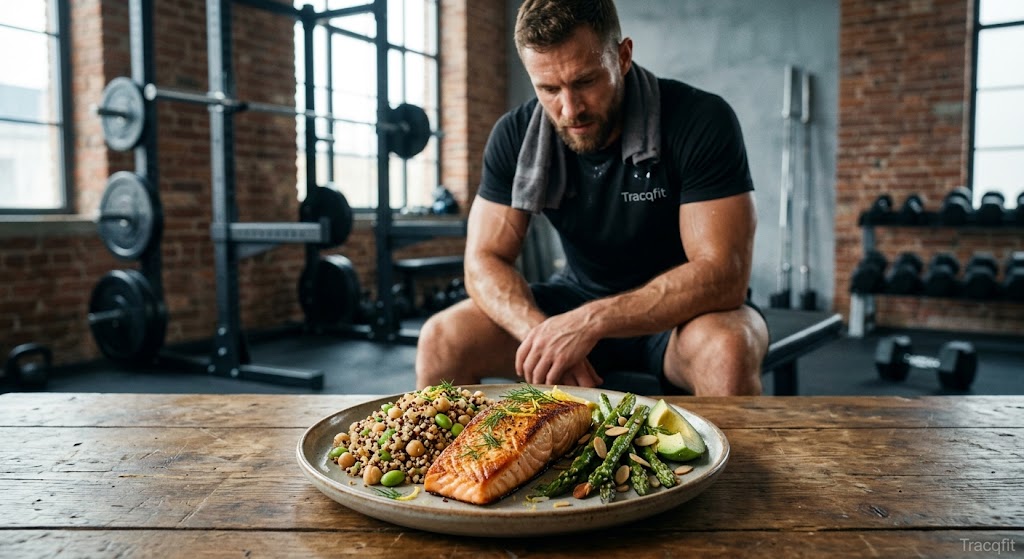
Protein does three things that matter for losing belly fat: it keeps you full, it preserves muscle while you're losing weight, and it costs your body more energy to digest than carbs or fat.
Aim for 1.4–1.6 grams per kilogram of body weight (roughly 0.65–0.75 g per pound). For most adults that's 100–150 g a day, spread across meals.
3. Lift Weights, Then Walk
Strength training doesn't burn belly fat directly, but it protects the muscle underneath — which is what makes you look leaner at the same weight, and what keeps your metabolic rate from falling as you diet.
- 2–4 strength sessions a week — squats, deadlifts, presses, rows, and yes, some direct ab work for strength
- 7,000–10,000 steps daily — the most sustainable calorie burn available, and it doesn't spike hunger the way hard cardio does
- Optional cardio — useful, but it should add to the deficit, not replace lifting
No gym? A bodyweight home workout covers the same movement patterns.
4. Fix Sleep and Stress
This is the one most people skip, and it's disproportionately important for belly fat specifically. Poor sleep raises hunger hormones and makes adherence collapse. Chronic stress raises cortisol, which is associated with greater fat storage around the abdomen.
Seven to nine hours of sleep isn't a wellness platitude here — it's a fat-loss variable.
The Best Exercises for Belly Fat
To be precise: these are the best exercises for fat loss overall, which is how belly fat comes off. Ranked by how much they contribute:
- Compound strength movements — squats, deadlifts, lunges, presses, rows. Most muscle worked, most calories burned, most muscle preserved.
- Walking — high volume, low fatigue, easy to sustain daily. Underrated.
- Cycling, swimming, rowing — solid calorie burn, joint-friendly.
- HIIT — time-efficient, but demanding to recover from. 1–2 sessions a week is plenty.
- Ab exercises — planks, hanging leg raises, cable crunches. These build the muscle that shows once fat comes off. They don't remove the fat.
What Doesn't Work (Stop Wasting Money)
- Fat burner supplements — most produce effects too small to notice, and the ones with real stimulant doses mostly just suppress appetite temporarily
- Waist trainers and sweat belts — you lose water, which returns the moment you drink
- Detox teas and juice cleanses — laxative effects, not fat loss
- Endless crunches — build abs, don't reveal them
- Cutting out one food group — carbs aren't why you have belly fat; a calorie surplus is
How Long Does It Take to Lose Belly Fat?
It depends on how much you're carrying and how consistent you are, but here's a realistic map:
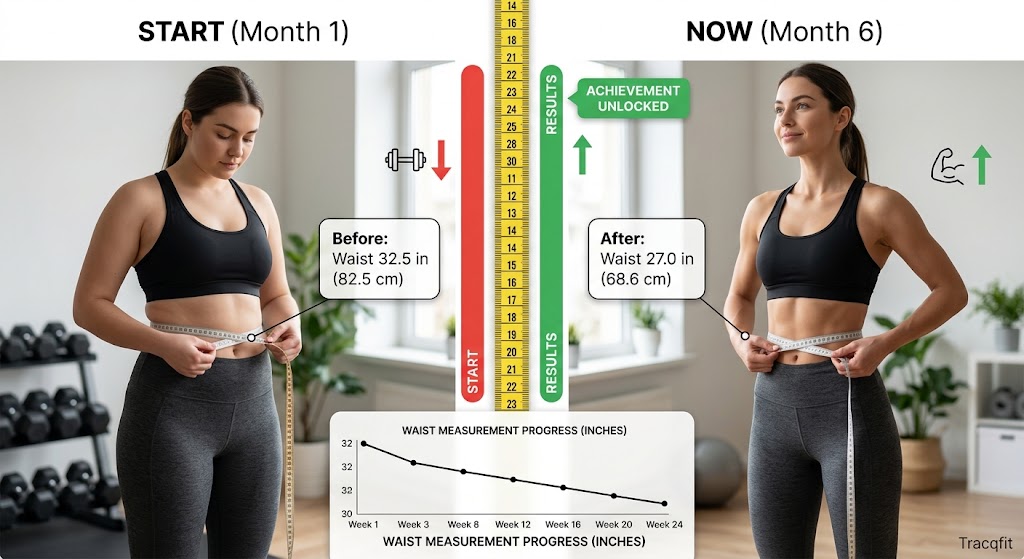
- Weeks 1–3 — visceral fat starts dropping. Waist measurement moves before the mirror does.
- Weeks 4–8 — clothes fit differently, the waistband loosens, you look noticeably leaner in photos.
- Weeks 8–16 — visible definition, especially if you've been strength training throughout.
- Beyond — the last layer of lower-belly subcutaneous fat is genuinely the most stubborn, because it's usually the last place your body draws from.
Why Your Belly Fat Isn't Moving
If you're doing the above and seeing nothing after 3+ weeks, the cause is almost always one of these:
- You're eating more than you think — untracked oils, drinks, weekends, and "bites" add up fast
- You're losing fat but retaining water, masking it on the scale
- Your deficit disappeared as you lost weight and your maintenance dropped
- You're under-sleeping, which makes everything else harder
Full breakdown: Why Am I Not Losing Weight Even Though I'm Eating Less?
FAQ
What is the fastest way to lose belly fat?
A consistent calorie deficit of 400–600 calories a day, high protein intake, 2–4 strength sessions a week, and 7,000+ daily steps. There is no faster method that is also safe — anything promising rapid targeted belly fat loss is either water weight or marketing.
Can you lose belly fat without exercise?
Yes. Fat loss is driven by the calorie deficit, so diet alone will reduce belly fat. But without strength training you'll lose more muscle along with the fat, which leaves you smaller but softer and lowers your metabolic rate. Exercise makes the result better, not the loss possible.
Do crunches and sit-ups burn belly fat?
No. Crunches strengthen abdominal muscles but don't remove the fat covering them — spot reduction has been tested and doesn't work. Ab exercises are worth doing for core strength and for the definition that shows once your body fat drops, but they won't reveal your abs on their own.
Why is lower belly fat so hard to lose?
Lower abdominal fat tends to have more alpha-2 adrenergic receptors, which make fat release from those cells slower, and blood flow to the area is lower. Practically, that means it's usually the last place to lean out. It is not permanent — it just requires getting to a lower overall body fat level.
How long does it take to lose belly fat?
Most people see waist measurement changes within 3–4 weeks and clear visual changes by 8–12 weeks with a consistent deficit. Visceral fat responds fastest; the final layer of subcutaneous fat takes longest.
Does stress cause belly fat?
Chronic stress elevates cortisol, which is associated with increased abdominal fat storage and with higher appetite for calorie-dense food. Stress doesn't create fat from nothing, but it makes a deficit much harder to sustain and shifts where fat is stored.
Where to Go From Here
Want a calorie and protein target built from your own numbers? Tracqfit calculates both from your body data and adjusts as you lose weight — so your deficit doesn't quietly disappear halfway through.