Progressive Overload: The Only Strength Training Principle That Matters
Same workout, same weights, same plateau. Progressive overload is the one variable behind almost every strength and muscle gain — here's how to apply it correctly.
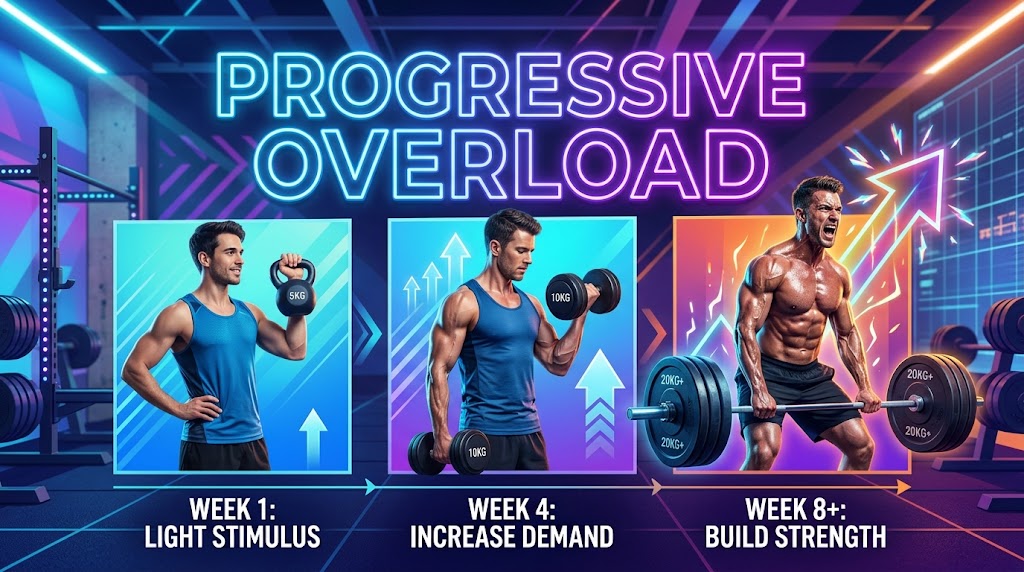
You can train five days a week for a year and gain almost nothing, or train three days a week and transform your body — the difference isn't effort, it's progressive overload. Most people who plateau aren't training too little; they're doing the same workout on repeat and calling it progress because they're tired afterward. This single concept explains why some gym-goers look completely different a year later while others look identical to their first month, despite putting in comparable hours.
Why Most Training Plans Stop Working
Your body adapts to stress and then stops changing until the stress increases again. Lift the same weight for the same reps every session, and your muscles have no reason to grow stronger — they've already adapted to that exact demand.
Progressive overload is the single mechanism behind almost every strength and muscle gain that exists. Everything else — exercise selection, rep ranges, rest periods — matters far less than this one variable.
This is also why two people can follow completely different-looking programs and both get great results, while a third person follows a beautifully designed program and gets nowhere. The specific exercises matter less than whether the demand placed on the muscle is increasing over time. A mediocre program applied with real progressive overload beats a perfect program applied without it.
The 5 Ways to Apply Progressive Overload
- Add weight — the most direct method; increase load once you can complete all prescribed reps with good form.
- Add reps — stay at the same weight but push for one or two more reps than last session.
- Add sets — increase total training volume by adding a set once reps and weight have plateaued.
- Improve form and range of motion — a deeper squat or a slower, more controlled rep is a real form of overload.
- Reduce rest time between sets — the same weight and reps in less recovery time raises the overall demand.
You don't need all five at once. Pick one variable to push each session while holding the others steady — trying to increase weight, reps, and sets simultaneously usually backfires with poor form and stalled recovery.
Building It Into a Simple Program
The easiest system for beginners is linear progression: add a small amount of weight to a compound lift every session as long as all reps are completed with good form. This works reliably for the first 3-6 months of training before gains naturally slow down.
Linear progression works so well for beginners because almost any consistent stimulus is new to an untrained body — the nervous system is learning the movement pattern at the same time the muscle is adapting, and both improve quickly together. This is also why beginner programs look deceptively simple: the simplicity is the point, not a shortcut.
- Squat, bench press or push-ups, deadlift or hip hinge, and a row form the backbone of most effective programs
- Train each movement pattern 2-3 times a week for faster progression than once-a-week sessions
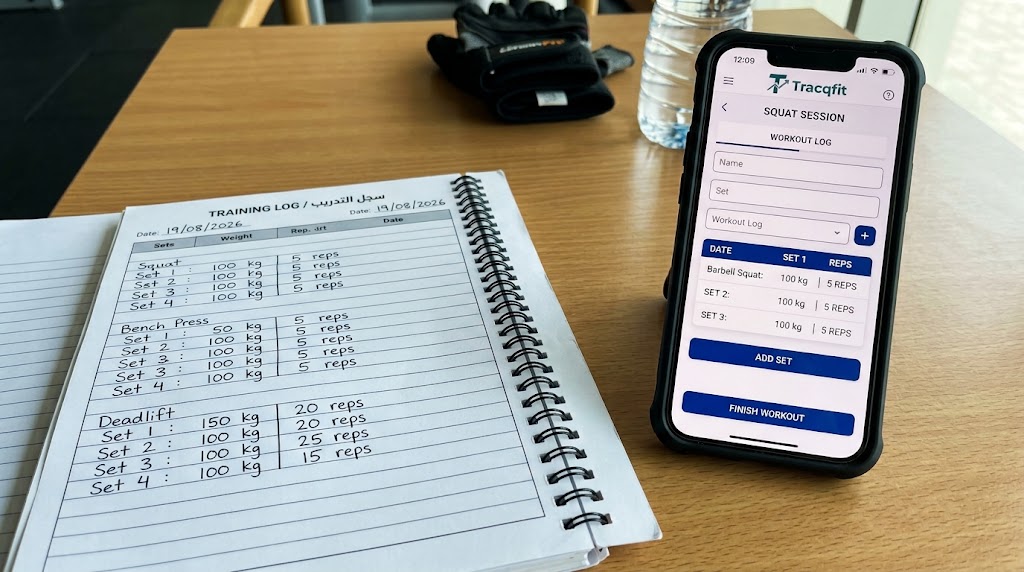
- Log every session — weight, reps, and how the last rep felt — because memory is an unreliable coach
- Increase load in small increments once form is solid, rather than large jumps that break technique
How Beginners, Intermediates, and Advanced Lifters Progress Differently
Beginners can often add weight almost every single session because their nervous system and muscles are both adapting quickly to a completely new stimulus — this is sometimes called "newbie gains" and it's real, but temporary.
Intermediate lifters, usually after 6-12 months of consistent training, need a slower approach: weekly or biweekly increases, more attention to rep quality, and planned variation in rep ranges to keep progressing. Advanced lifters often need months of structured periodisation — deliberately cycling harder and easier phases — to keep moving forward at all, because the easy gains are long gone. Knowing which stage you're in prevents the frustration of expecting beginner-speed progress at an advanced level.
Case Study: A Stalled Lifter Who Broke the Plateau
A lifter training consistently for eight months had barely added weight to their squat since month two. Every session looked productive — sweat, fatigue, soreness — but the number on the bar hadn't moved because they were changing the workout every week instead of tracking progress on the same lifts.
Switching to a simple log and committing to the same core lifts for eight straight weeks, adding small increments whenever form allowed, produced a noticeable strength jump within 6-8 weeks — not from working harder, but from finally giving the body a clear, trackable target to beat.
Soreness is not progress. A heavier bar, more reps, or a cleaner rep than last time — that's progress.
When Progress Naturally Slows Down
- Switch from adding weight every session to every 1-2 weeks as a beginner plateau approaches
- Introduce planned deload weeks every 6-8 weeks — a lighter week that lets the body fully recover before pushing again
- Vary rep ranges across mesocycles — a few weeks of heavier, lower reps followed by higher-rep phases
- Prioritise sleep and total daily protein — overload without recovery just produces fatigue, not growth
A deload week isn't wasted training time — it's what allows the next 6-8 week block to actually produce new gains instead of compounding fatigue. Lifters who skip deloads often see performance quietly decline for weeks before realising accumulated fatigue, not lack of effort, is the real culprit.
Nutrition's Role in Making Overload Possible
Progressive overload without adequate food is asking the body to do more work with fewer resources to recover from it — a recipe for stalled progress or injury, not growth. Adequate protein (roughly 1.6-2.2g per kg of bodyweight for most active people) and enough total calories to support the increased training demand are what actually let each session's overload translate into strength and size, rather than just accumulated fatigue.
Common Mistakes
- Changing the entire workout every week. Fix: repeat the same core lifts for at least 6-8 weeks to actually track progress.
- Chasing weight increases at the cost of form. Fix: only add load once every rep is clean.
- Ignoring recovery and training through constant fatigue. Fix: schedule deload weeks before burnout forces one.
- Not logging workouts. Fix: track every session — a memory-based plan is not a real plan.
- Adding too many variables at once. Fix: progress one variable — weight, reps, or sets — at a time.
How to Know It's Working
- Training log shows a clear upward trend over 4-6 weeks
- Same weight now feels noticeably easier or allows more reps than a month ago
- Form stays consistent or improves as load increases, rather than breaking down
- Recovery between sessions feels manageable, not accumulating fatigue week over week
If none of these signs are showing up after 4-6 consistent weeks, the issue is almost always one of three things: the log isn't accurate, the diet isn't supporting the training, or sleep is falling short — rarely is it that the training method itself has stopped working.
FAQ
How often should I increase the weight?
Beginners can often add weight nearly every session on major lifts; intermediate lifters usually need 1-2 weeks between increases as gains slow down naturally.
Can I apply progressive overload with bodyweight training?
Yes — add reps, slow the tempo, increase range of motion, or move to a harder variation (knee push-ups to standard, then to decline push-ups) to keep the same principle working.
What if I stop seeing any progress at all?
Check sleep, total food intake, and whether you're actually training the same lifts consistently — a stalled log is usually a recovery or consistency issue, not a training-method issue.
Is it bad to feel sore after every single workout?
No, but constant severe soreness usually means recovery isn't keeping pace with training — it's a sign to check sleep and protein intake, not a sign the workout is working better than usual. Mild, manageable soreness is normal; being unable to walk down stairs for three days is not the goal.
Putting It Into a 4-Week Plan
- Week 1: pick 4 core lifts and log your current weight and reps as a baseline.
- Week 2: add small load or reps to each lift whenever form stays clean.
- Week 3: hold steady on any lift that starts to stall in form.
- Week 4: review the log for a clear upward trend before deciding on the next block.
The mistake most people make isn't lacking motivation — it's lacking a clear number to beat each session. Once that number exists, on paper or in an app, progress stops being a vague hope and becomes something you can measure and repeat, week after week.
Progressive overload is the one principle every effective program is built on, whether it's written by a coach or figured out through trial and error. If you'd rather have a structured plan built around this from day one, with someone tracking your numbers for you, check our 12-week program.