12-3-30 Treadmill Workout: Does It Work for Weight Loss?
12% incline, 3 mph, 30 minutes. The TikTok treadmill workout is genuinely good — but not for the reasons people think. Here's the honest breakdown and a beginner-friendly build-up.

The 12-3-30 workout is simple: set the treadmill to a 12% incline, a speed of 3 miles per hour (about 4.8 km/h), and walk for 30 minutes. It went viral after a fitness creator credited it with a big weight loss, and millions of people have tried it since. Some love it. Some quit after one session with burning calves and aching shins. Here's what it actually does, how many calories it really burns, and how to build up to it without hurting yourself.
Why the 12-3-30 workout became so popular
It hits a sweet spot most cardio misses. It's low impact like walking, but the steep incline drives your heart rate into the same zone as a slow jog. You can do it without being "a runner," you don't need to learn anything, and 30 minutes is a fixed, finite commitment.
Incline walking burns close to jogging calories while putting a fraction of the impact through your knees. That's the real reason it works. It isn't a fat-burning hack — it's just a very efficient way to burn calories that most people can repeat several times a week without getting injured or wrecked.
How many calories does 12-3-30 burn?
Estimates based on standard metabolic equations for incline walking at 3 mph and 12% grade:
| Body weight | Calories burned (30 min) |
|---|---|
| 130 lb / 59 kg | 220–260 |
| 160 lb / 73 kg | 270–320 |
| 190 lb / 86 kg | 320–380 |
| 220 lb / 100 kg | 370–440 |
| 250 lb / 113 kg | 420–500 |
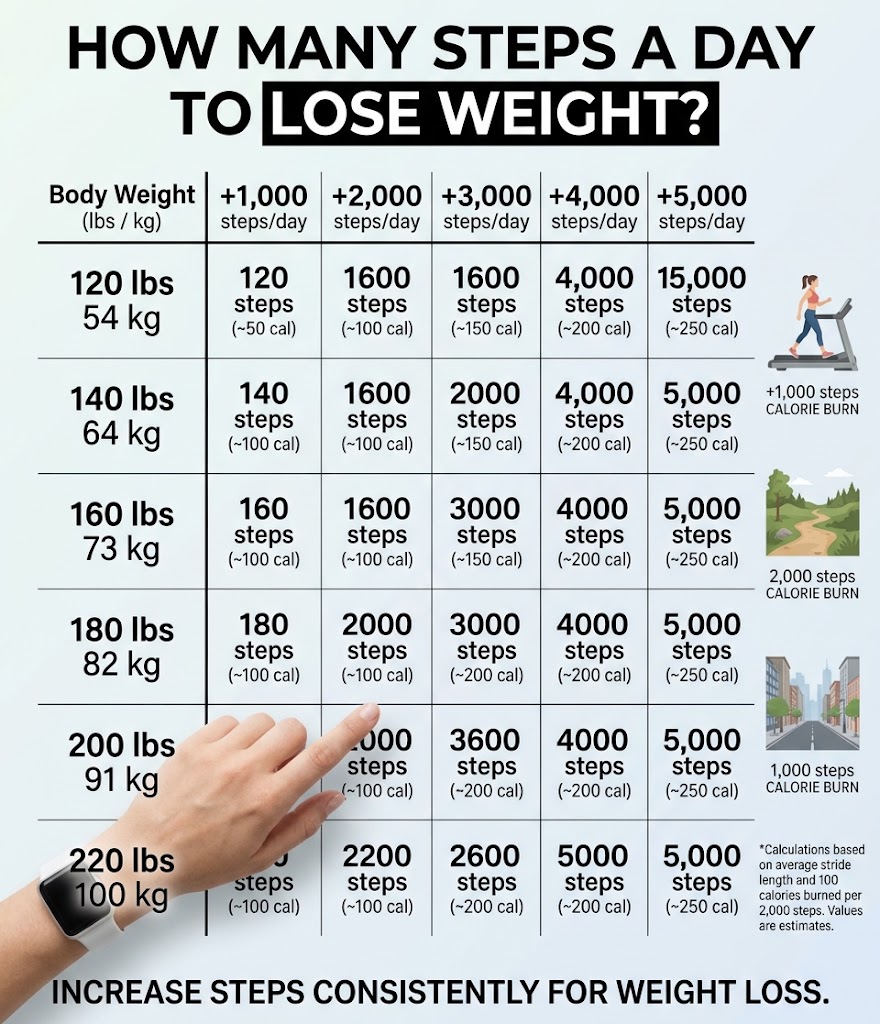
For comparison, walking on flat ground at the same speed for 30 minutes burns roughly half that. If you want to see how that fits into your daily total, compare it with the calories from your step count in how many steps a day to lose weight.
Does it burn belly fat?
Not specifically. No cardio workout targets belly fat — your body decides where it pulls fat from. What 12-3-30 does is add 250–450 calories of burn to your day, which helps create the calorie deficit that eventually shrinks your waist along with everything else. Our guide on how to lose belly fat covers what does actually move that number.
The "fat-burning zone" claim you'll see on social media is also oversold. Yes, a steady moderate effort uses a higher percentage of fat for fuel than sprinting. But total calories burned across the day decide fat loss, not the fuel mix in the moment.
12-3-30 doesn't melt belly fat. It makes a calorie deficit easier to hit, and that's what melts belly fat.
The beginner build-up (don't start at 12-3-30)
Most people who quit after the first session started too hard. Use this 4-week ramp instead:
- Week 1 — 6% incline, 3 mph, 20 minutes, 3 times a week
- Week 2 — 8% incline, 3 mph, 25 minutes, 3 times a week
- Week 3 — 10% incline, 3 mph, 30 minutes, 3–4 times a week
- Week 4 — 12% incline, 3 mph, 30 minutes, 3–4 times a week
If 3 mph feels like a jog for your height, drop to 2.5 mph and keep the incline. Shorter people often find 3 mph at 12% genuinely hard, and there's no prize for matching the original numbers exactly. The workout is a framework, not a rulebook.
This is the same principle as progressive overload in the weight room: increase the challenge a little at a time, and your body adapts instead of breaking down.
A real example
Sarah, 34, from Austin, started 12-3-30 cold — full incline, full 30 minutes — and lasted 11 minutes before her shins and lower back gave out. She took a week off, then restarted at 6% for 20 minutes using the ramp above.
By week five she was doing the full version four times a week, alongside two short strength sessions. Over the next couple of months she dropped roughly 4–6 kg. The difference wasn't the treadmill setting — it was being able to keep going week after week.
Form fixes that matter
- Let go of the handrails — holding on can cut calorie burn by 20% or more
- Stand tall with a slight forward lean from the ankles, not the waist
- Take shorter, quicker steps rather than long reaching strides
- Land mid-foot rather than slamming your heel into the belt
- Wear proper walking or running shoes, not flat gym trainers
Holding the rails is the most common mistake by far. If you can't walk without holding on, the incline or speed is too high — drop one of them until you can.
Common mistakes
- Starting at the full 12% on day one — fix: use the 4-week ramp above
- Gripping the handrails the whole time — fix: lower the incline until you can walk hands-free
- Doing it every single day — fix: 3–4 days a week leaves room for recovery and strength training
- Ignoring shin or Achilles pain — fix: reduce incline for a week and stretch calves daily
- Replacing strength training with it — fix: keep 2–3 strength sessions; cardio alone loses muscle in a deficit
How to know it's working
- The full 30 minutes at 12% feels like a 6/10 effort instead of 9/10
- Your heart rate at the same setting drops by 5–10 beats per minute over a month
- Weekly average weight trending down 0.25–1 lb (0.1–0.5 kg)
- Waist down 1–2 cm (about half an inch) in the first 4–6 weeks
FAQ
Is 12-3-30 good for beginners? Yes, if you build up to it. Start at a lower incline for shorter sessions and work up over 3–4 weeks. Jumping straight to the full version is the main reason beginners quit or get sore shins.
How often should I do the 12-3-30 workout? 3–4 times a week is plenty for most people. Doing it daily tends to cause calf and Achilles irritation, and it crowds out strength training, which matters more for keeping your metabolism up while dieting.
How long until I see results from 12-3-30? Most people notice better fitness within 2 weeks and measurable waist or weight changes within 4–6 weeks — as long as their eating also supports a calorie deficit. Without the deficit, the scale may not move.
Can I do 12-3-30 if I have knee problems? Incline walking is lower impact than running and many people with knee issues tolerate it well. Start with a lower incline, stop if pain sharpens, and check with a physiotherapist if you have a diagnosed condition.
Putting it all together
- Follow the 4-week ramp instead of starting at the full workout
- Do it 3–4 times a week, hands off the rails
- Pair it with 2–3 strength sessions — a beginner 4-day split works well
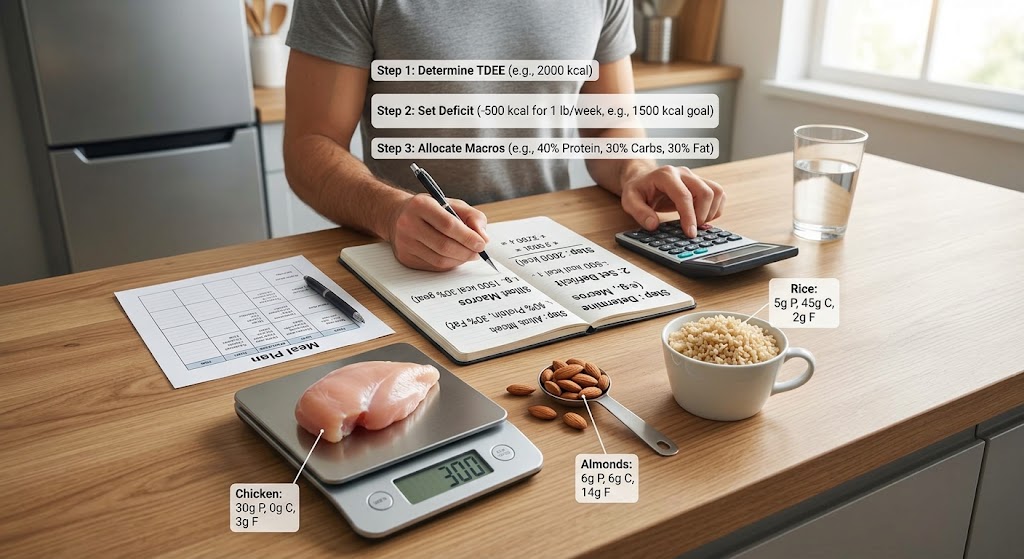
- Set your calorie target with the calorie and macro planner so the burn actually turns into fat loss
12-3-30 is a genuinely good workout wrapped in an oversold promise. Treat it as one strong tool inside a sensible plan and it will reward you. If you'd like the whole plan — cardio, strength and food — built around your schedule with a coach on WhatsApp, take a look at our 12-week program.