Stevia vs Monk Fruit: Which Sweetener Is Better?
Two zero-calorie sweeteners, two very different aftertastes. Here's what stevia and monk fruit actually do in chai, curd and baking — and how to pick one without wasting ₹500 on a pack you never finish.

You decide to cut sugar. Then you walk into the sweetener aisle and there are eight brands, three of them cost more than ₹600, and every packet claims to be "natural." Stevia and monk fruit are the two that keep showing up. Most people buy one, hate the aftertaste, and quietly go back to sugar. That is usually a product problem, not a sweetener problem. Here is what each one actually is, where each one works, and how to buy the right pack the first time.
[ADD IMAGE: close-up of stevia powder and a monk fruit sachet side by side on a kitchen counter]
What these two actually are
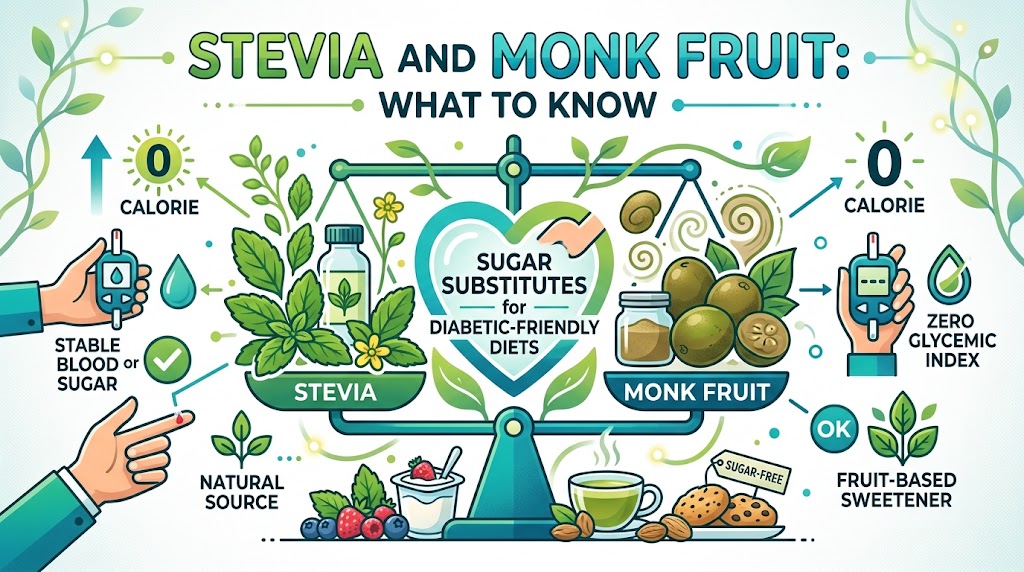
Stevia comes from the leaves of the stevia plant. The sweet compounds in the leaf, called steviol glycosides, are extracted and concentrated. They are intensely sweet, far sweeter than sugar by weight. Monk fruit comes from a small gourd grown mainly in southern China, and its sweet compounds are called mogrosides. Both are plant-derived, both contribute effectively no calories, and both are approved as food ingredients by major food safety authorities.
Neither one is sugar-free magic. They replace the sweet taste of sugar, not the role sugar plays in your overall diet. If most of your calories come from parathas, namkeen and late-night snacking, switching your chai sweetener will not do much. If you drink three sweet teas a day, it genuinely adds up.
The bigger point most packets hide: what you buy is rarely pure stevia or pure monk fruit. Both are usually blended with a bulking agent, most often erythritol, so one spoon of the product measures like one spoon of sugar. That bulking agent is doing a lot of the work you are tasting.
Five things that decide which one suits you
- Aftertaste — stevia has a mild bitter or liquorice-like finish for many people
- Cleanliness of taste — monk fruit tastes closer to sugar for most palates
- Price per gram — monk fruit is usually several times costlier in India
- What it is blended with — erythritol tastes cooling, almost minty
- Form — liquid drops, powder sachets, or spoon-for-spoon replacement packs
Aftertaste is the make-or-break factor, and it is genuinely individual. Sensitivity to stevia's bitter note varies from person to person. That is why one friend swears by it and another cannot finish a cup. You cannot predict which camp you fall into by reading reviews. You find out with one cup of chai.
Cost matters more than people admit. A monk fruit blend typically costs several times a stevia blend for the same sweetening power, partly because monk fruit is still a niche import here. If you are sweetening two cups a day for years, that gap compounds.
What happens in a real Indian kitchen
Priya, 34, Kochi, switched her two daily chais and her morning curd from sugar to a stevia blend. First week, she hated it. The tea tasted metallic and sharp. She was using roughly the same volume she used for sugar, which massively over-sweetened it. Half the amount, and the bitterness mostly disappeared. That is the single most common mistake with these products.
Where they struggle is anything where sugar does structural work rather than just sweetening. Sugar browns, it caramelises, it keeps halwa and cakes soft and moist. Swap it out entirely and you get a cake that is pale, dry and slightly crumbly. For payasam, kheer and most mithai, a partial swap tastes far better than going to zero.
Curd, lassi, coffee, chai, lemon water, oats: all fine. These are the easy wins. Start there.
Form matters more than the brand name on the front. Liquid drops give you the finest control, which is exactly what you want while you are still learning your dose. Powder sachets are convenient for office and travel but come pre-measured for someone else's taste. Spoon-for-spoon replacement packs are the most beginner-friendly and the most expensive per gram of actual sweetness, because most of what you are paying to ship is bulking agent. If you cook at home regularly, drops or loose powder will cost you far less over a year.
There is also a household angle nobody mentions. If one person switches and the rest of the family does not, you end up making two versions of every chai, and that friction is what kills the habit by week three. Either switch the whole pot and let everyone adjust together, or keep your own small bottle of drops next to your cup and sweeten in the cup, not in the vessel.
Cutting sugar in your chai only counts if you do not add it back to the rest of your day.
How to switch without hating it
- Start at half the volume you would use for sugar, then adjust upward
- Try liquid drops first, since they are easier to add slowly than powder
- Buy the smallest pack available before committing to a large one
- If stevia tastes bitter to you, try monk fruit before giving up entirely
- Keep a partial swap for baking and mithai instead of a full one
The half-quantity rule fixes most bad first impressions. These sweeteners are far sweeter than sugar per gram, and even spoon-for-spoon blends often overshoot for Indian palates because they are formulated for Western coffee.
Give any new sweetener about a week before you judge it. Your palate adapts. Tea that tastes strange on day one often tastes normal by day five. More usefully, regular sugar starts tasting cloying after a few weeks off it, which makes staying off it easier.
One practical warning. Erythritol, the common bulking agent in both, can cause bloating or loose stools in larger amounts for some people. This is dose-dependent. A little in your chai is very unlikely to be an issue. Half a pack in a batch of cookies might be. If you notice digestive discomfort, that is usually the culprit, not the stevia or monk fruit itself.
Common mistakes
- Using the same volume you used for sugar — fix: start at half and work up
- Judging it on day one — fix: give your palate a full week to adjust
- Full swap in baking and mithai — fix: partial swap, keep some sugar
- Buying a ₹700 pack before you know you like it — fix: smallest size first
- Treating zero calories as unlimited — fix: watch the whole day, not one swap
- Ignoring the ingredient list — fix: check the blend before blaming the sweetener
How to know it is working
- Your daily added-sugar count drops and stays down for four straight weeks
- Waist measurement moves, even slightly, across 6-8 weeks
- Sweet cravings between meals get rarer on a 1-10 scale
- Plain fruit starts tasting genuinely sweet again
- You are not compensating with extra biscuits or namkeen later in the day
That last one is the trap. Swapping sugar out of chai and adding two rusks to go with it is a net loss. Track the whole day, not the one swap.
FAQ
Is stevia or monk fruit safe for daily use?
Both are approved as food ingredients by major food safety authorities, and both have acceptable daily intake levels well above what normal household use reaches. If you have an existing medical condition, or you are pregnant, run it past your doctor first.
Will these help me lose weight?
Only through the calories they replace. Swapping four teaspoons of sugar a day saves a meaningful amount over a month, but only if the rest of your intake stays the same. The sweetener is not doing anything active. It is simply not adding anything.
Which one tastes closest to sugar?
Most people find monk fruit cleaner and closer to sugar, with less aftertaste than stevia. It also costs more. If price matters, try stevia first, because plenty of people have no issue with it at all.
Your 30-day plan
- Week 1 — swap only chai or coffee, at half the volume you used for sugar
- Week 2 — add curd, oats and lemon water to the swap
- Week 3 — cut packaged sweet drinks and sweetened yoghurt, read the labels
- Week 4 — try a partial swap in one home-cooked sweet dish, not a full one
The point of a sweetener is not to make sugar disappear from your life. It is to remove the boring, automatic sugar, the two spoons in chai you never even taste, so the sugar you actually enjoy still fits.
If you want the rest of it structured, with food, training and someone on WhatsApp when you are stuck at a wedding buffet, have a look at our 12-week program. One payment, no monthly fee.