Stevia and Monk Fruit for Diabetes: What to Know
Stevia and monk fruit do not raise blood sugar on their own. The problem is almost never the sweetener, it is what the packet is mixed with and what the food is made of. Here is how to check both.
If you have diabetes or prediabetes, sugar is the first thing every doctor, aunt and WhatsApp forward tells you to cut. So you buy a sweetener. Then you eat a "sugar-free" sweet, test two hours later, and the number is high anyway. That is confusing enough to make most people give up on the whole category. The sweetener usually was not the problem. Here is what stevia and monk fruit actually do to blood sugar, what the packet is hiding, and how to check any swap yourself.
This is general information, not medical advice. Your doctor and your own glucometer readings overrule anything written here.
[ADD IMAGE: a glucometer reading next to a cup of chai on a kitchen table]
What they do to blood sugar
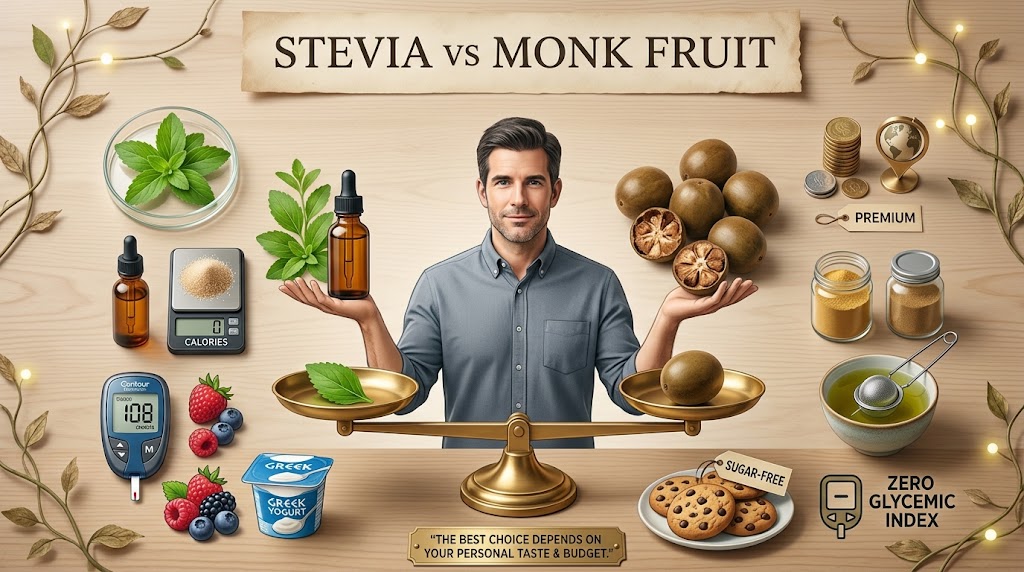
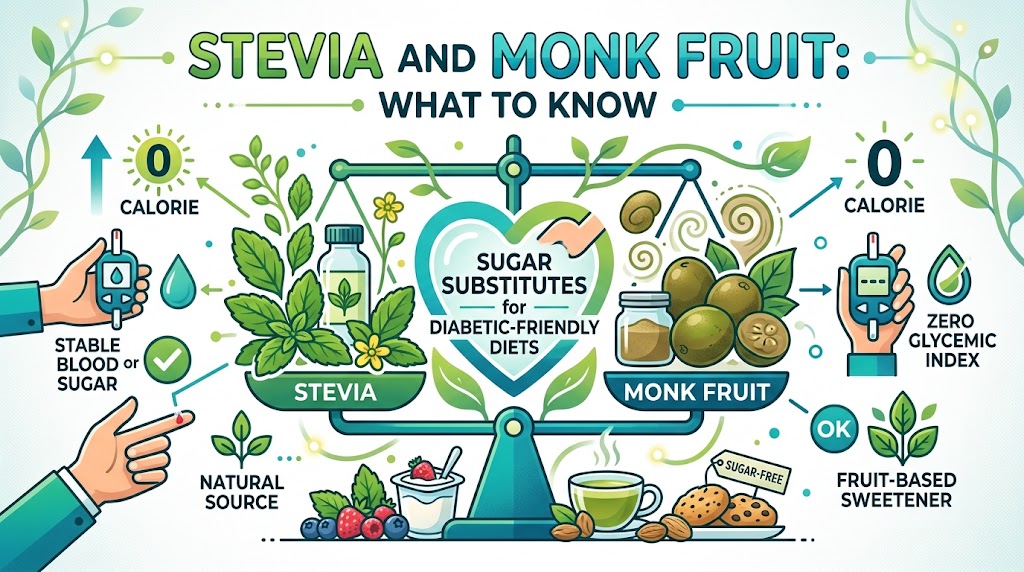
Stevia comes from stevia leaves, monk fruit from a small gourd. The sweet compounds in both, steviol glycosides and mogrosides, are not carbohydrates in any meaningful amount and are not metabolised the way sugar is. In practical terms, they contribute effectively no calories and no carbohydrate load, which is why they are generally considered suitable for people managing blood sugar.
The sweetener in the packet is rarely the thing that moves your reading. The food you put it in almost always is. A sugar-free burfi made with khoya, ghee and cashew still carries fat and carbohydrate. A sugar-free biscuit is still refined flour. Replacing the sugar does not replace the rest of the recipe.
That distinction is the single most useful thing to take from this article. When a number surprises you, look at the whole food before you blame the sweetener.
What the label is actually hiding
- Bulking agents — most blends are mostly erythritol, maltitol or dextrose
- Maltitol and other polyols do raise blood sugar, unlike erythritol
- Dextrose and maltodextrin fillers are sugars, despite the "sugar-free" claim front
- "Sugar-free" on a packet does not mean carb-free or calorie-free
- Serving sizes on the nutrition panel are often unrealistically small
This is where most people get caught. A tabletop sweetener sold as stevia may be only a tiny percentage stevia by weight, with the rest a carrier. If that carrier is dextrose or maltodextrin, you are eating a small amount of sugar with your stevia. If it is maltitol, common in sugar-free chocolates and mithai, expect a real effect on your reading and possibly on your stomach too.
Erythritol is the friendlier carrier for blood sugar purposes and is the most common one in good-quality blends. It can still cause bloating or loose stools at higher amounts. Read the ingredient list, not the front of the pack. The order tells you what you are mostly buying.
A reading that made sense afterwards
Rajesh, 52, Coimbatore, type 2 for six years, switched to a stevia blend in his chai and saw his fasting numbers drift down slightly over a couple of months, mostly because the swap pushed him to look at the rest of his diet too. Then Diwali came, he ate four "sugar-free" sweets from a mithai shop, and his post-meal reading was as high as it had ever been.
The sweets were made with maltitol, khoya and ghee. Sugar-free on the box, high carbohydrate and high fat in the bowl. Nothing about the stevia in his chai had stopped working. He had simply eaten a dessert that happened to leave out one ingredient.
The lesson is not to avoid sweets forever. It is that the words on the box tell you almost nothing about what the food will do to you. Only the ingredient list and your own meter do.
Sugar-free tells you one ingredient was left out. It tells you nothing about the rest.
How to test any swap on yourself
- Test before eating, then again around two hours after, per your doctor's guidance
- Change one thing at a time so you know what caused what
- Repeat the same test on three separate days before drawing a conclusion
- Keep portion, time of day and activity roughly the same across those tests
- Write it down, since memory is unreliable and patterns are easy to miss
Individual responses vary more than most articles admit. Two people with the same diagnosis can react differently to the same sugar-free product, largely because of what else is in it and how their medication and meal timing interact. Your meter is more reliable than any general claim, including the ones in this article.
If you take insulin or a medication that can cause low blood sugar, talk to your doctor before making swaps that meaningfully change the carbohydrate content of your meals. Reducing the carbohydrate in a meal can change how much medication that meal needs. That adjustment is a medical decision, not a kitchen one.
Timing and pairing change the picture too. The same sugar-free biscuit eaten alone on an empty stomach at 4 pm and eaten right after a full meal with dal and vegetables will often give you two different readings, because fibre, protein and fat all slow how quickly carbohydrate hits your bloodstream. This is why a swap that looks useless in isolation sometimes works well inside a proper meal. When you test, note what else was on the plate.
Festival season deserves its own plan rather than its own panic. Between Diwali, Onam, weddings and office parties, most people face several high-carbohydrate days a year that no sweetener will fix. The workable approach is a portion decision made before you are standing at the table, a walk after the meal, and no attempt to compensate by skipping the next one. Skipping meals to make room for sweets tends to produce bigger swings, not smaller ones.
There is one more benefit worth naming. For many people with type 2 diabetes, gradual weight loss improves blood sugar control. Cutting the automatic sugar in daily chai and coffee is a small, sustainable step in that direction. It is not a treatment, but it is a real contribution and it costs almost no willpower.
Common mistakes
- Trusting the sugar-free claim on the front — fix: read the ingredient list every time
- Assuming all polyols behave alike — fix: erythritol is mild, maltitol is not
- Eating more of a food because it is sugar-free — fix: keep the portion you would have eaten anyway
- Blaming the sweetener for a high reading — fix: check the flour, ghee and khoya first
- Changing several foods at once — fix: one swap at a time so the meter tells you something
- Adjusting medication on your own after cutting carbs — fix: that call belongs to your doctor
How to know it is working
- Fasting readings trend down gently across 4-8 weeks, not day to day
- Post-meal readings after your usual meals sit lower than your earlier baseline
- Your HbA1c at the next scheduled test reflects the trend, since that is the real scorecard
- Waist measurement drops, even a couple of centimetres
- Fewer sharp energy crashes in the afternoon on a 1-10 scale
One day's reading means very little on its own. Sleep, stress, illness and activity all move it. Look at the direction across weeks, and let your HbA1c and your doctor confirm it.
FAQ
Do stevia and monk fruit raise blood sugar?
On their own, they are not expected to meaningfully raise blood sugar, since they are not metabolised as carbohydrate. What often does raise it is the bulking agent in the blend, such as maltitol or dextrose, or the rest of the food they are used in.
Are sugar-free sweets safe for a diabetic?
Not automatically. Most sugar-free mithai and biscuits still contain refined flour, khoya, ghee or maltitol, all of which affect blood sugar, weight or both. Treat them as a smaller portion of a normal dessert, not a free food.
Should I pick stevia or monk fruit if I have diabetes?
For blood sugar purposes there is no strong reason to prefer one over the other. Choose on taste and price, and pick a blend whose carrier is erythritol rather than maltitol or dextrose. Confirm any dietary change with your doctor, especially if you are on medication.
Your 30-day plan
- Week 1 — read the ingredient list on every sweetener and sugar-free item at home
- Week 2 — swap chai and coffee only, then test before and after on three separate days
- Week 3 — replace packaged sugar-free snacks with fruit, nuts or curd
- Week 4 — take your log to your doctor and review medication and diet together
None of this makes desserts disappear. It makes them predictable, which is the part that actually matters when you are managing a number every day. A sweetener you understand is worth far more than a box that says sugar-free.
If you want food and training planned around this, with a coach on WhatsApp to check the awkward cases, look at our 12-week program. One payment, no monthly fee. Keep your doctor in the loop on anything medication-related.