How to Get 100g Protein a Day as a Vegetarian in India (No Eggs)
Hitting 100 grams of protein on a pure vegetarian Indian diet is completely doable — it just needs different portion sizes than most people expect. Here are the foods, the numbers, and three full day plans.
"Vegetarians can't get enough protein in India." It is repeated constantly, and it is wrong — but only just.
The truth is that a typical Indian vegetarian diet delivers around 40–50 g of protein a day, mostly from dal and roti. Getting to 100 g does not require exotic food. It requires deliberately anchoring every meal with a protein source, and knowing which foods actually deliver.
This guide is for pure vegetarians. No eggs, no chicken, no fish.
First: Do You Actually Need 100g?
Your protein target depends on your body weight and your goal, not on a round number:
- Fat loss — 1.4–1.6 g per kg of current body weight
- Muscle gain — 1.6–1.8 g per kg
- General health — 1.0–1.2 g per kg
So 100 g a day is roughly right for a 65–70 kg person losing fat, or a 60 kg person building muscle. If you weigh 55 kg, 80 g may be your number. Work out yours with the Ideal Weight Calculator or the protein guide.
The Real Protein Numbers (Per Normal Serving)
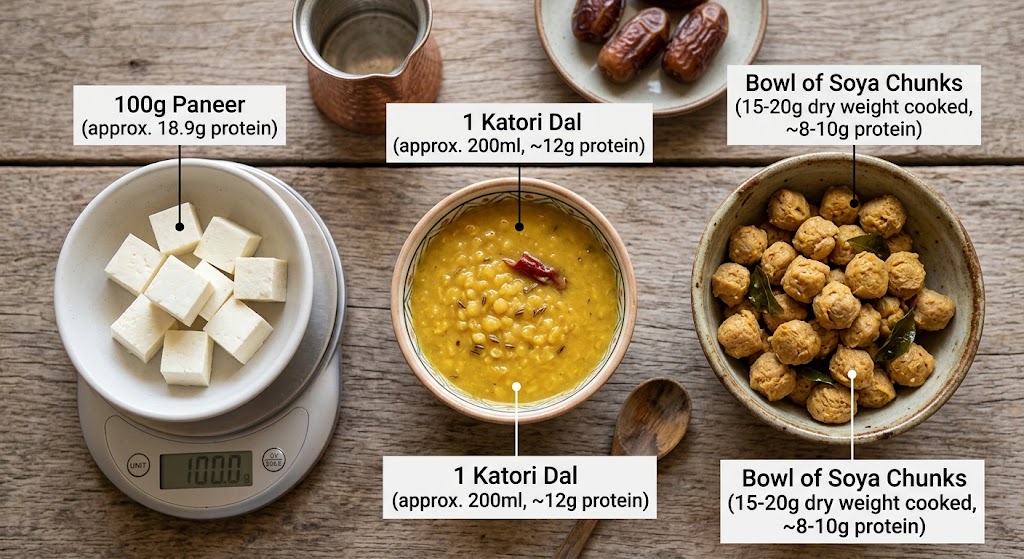
This is where most plans fall apart — people assume dal is a protein food. It helps, but a katori of dal is 9 g, not 25.
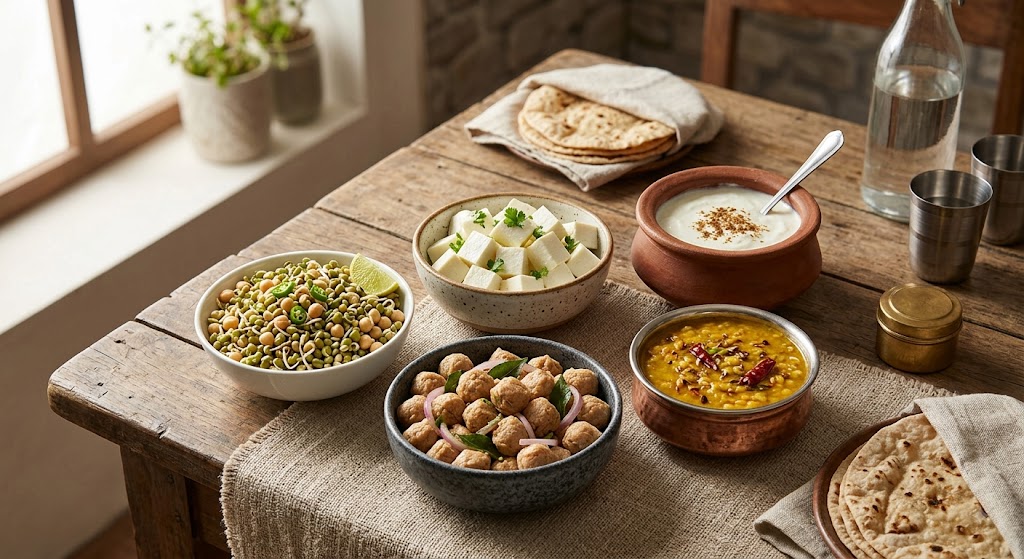
- Paneer, 100 g — 18 g protein
- Tofu, 100 g — 12 g
- Soya chunks, 50 g dry — 26 g (the highest-density vegetarian source in an Indian kitchen)
- Curd, 1 cup (200 g) — 8 g
- Greek yogurt, 150 g — 15 g
- Milk, 1 glass (250 ml) — 8 g
- Cooked dal, 1 katori — 9 g
- Rajma / chana, 1 katori cooked — 12 g
- Sprouted moong, 1 katori — 10 g
- Peanuts, 30 g — 8 g
- Roti, 1 medium — 3 g
- Rice, 1 katori cooked — 3 g
- Whey protein, 1 scoop — 24 g
The Structure That Gets You to 100g
Do not try to hit 100 g by eating more of everything. Instead, give each meal a protein anchor:
- Breakfast — 25 g. Paneer, curd, besan, or a protein shake.
- Lunch — 25 g. Dal plus a second source (curd, rajma, paneer).
- Snack — 15 g. Sprouts, roasted chana, peanuts, or a glass of milk.
- Dinner — 30 g. Soya, paneer, tofu, or rajma as the main dish, not the side.
Four anchors, roughly 95–100 g, without any single meal feeling like a bodybuilder's plate.
Day Plan 1: Home-Cooked (No Supplements)
- Breakfast — 2 besan chilla with 100 g paneer stuffing + 1 cup curd → 28 g
- Lunch — 2 roti + 1 katori dal + 1 katori rajma + salad → 24 g
- Snack — 1 katori sprouts chaat + 1 glass milk → 18 g
- Dinner — soya chunk curry (50 g dry) + 1 roti + sabzi → 30 g
Total: ~100 g protein. Zero supplements, all everyday ingredients.
Day Plan 2: Office / Tiffin-Friendly
- Breakfast — protein oats made with 250 ml milk + 30 g peanuts → 22 g
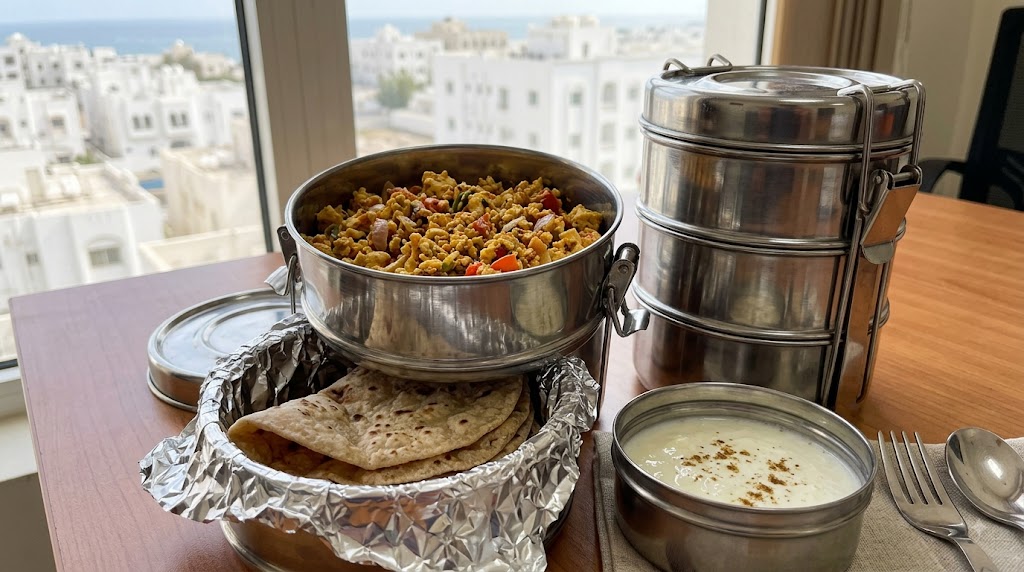
- Lunch (tiffin) — paneer bhurji (100 g) + 2 roti + curd → 32 g
- Snack — roasted chana 40 g + buttermilk → 14 g
- Dinner — moong dal khichdi with extra dal + 1 cup curd → 26 g
Total: ~94 g. Add one glass of milk at night to close the gap.
Day Plan 3: With One Whey Scoop
- Breakfast — 1 scoop whey in milk + 1 banana → 32 g
- Lunch — 2 roti + dal + 100 g paneer sabzi → 30 g
- Snack — curd bowl with peanuts → 16 g
- Dinner — rajma + rice + salad → 18 g
Total: ~96 g. Whey is optional convenience — useful if your mornings are rushed, not required.
The Four Mistakes Vegetarians Make
- Relying on dal alone. One katori is 9 g. You would need eleven of them. Dal is a supporting player.
- Counting roti and rice as protein. They contribute a little, but you cannot build a target on 3 g portions.
- Fearing paneer because of fat. 100 g of paneer is ~265 kcal and 18 g protein. It fits fine in most diets — just measure it.
- Ignoring soya. It is the cheapest, densest option available and most people never touch it.
Is Plant Protein 'Incomplete'?
Individually, most plant proteins are low in one amino acid or another — dal is low in methionine, rice and wheat are low in lysine. Practically, this matters far less than it is made to sound.
Eating a variety across the day — dal, dairy, soya, grains, nuts — covers the full amino acid profile. And soya and dairy are complete proteins on their own. Dal-chawal, the most ordinary Indian meal there is, is itself a complementary pair.
Budget Version: 100g Protein Under ₹150/day
- Soya chunks 50 g — ₹8
- Dal 2 katori — ₹15
- Curd 400 g (set at home) — ₹30
- Milk 500 ml — ₹30
- Peanuts 40 g — ₹8
- Sprouted moong 1 katori — ₹12
- Paneer 100 g — ₹45
High protein does not require an expensive diet. It requires knowing where the protein actually is.
FAQ
Can a vegetarian really get 100g of protein a day in India?
Yes, comfortably — using paneer, curd, milk, dal, rajma, sprouts, peanuts, and especially soya chunks. It takes deliberate portioning rather than special foods, and it can be done for under ₹150 a day.
Which vegetarian food has the most protein in India?
Soya chunks, by a wide margin: 50 g dry provides about 26 g of protein for roughly 170 calories. Paneer (18 g per 100 g) and Greek yogurt (15 g per 150 g) are next.
Do I need whey protein as a vegetarian?
No. Whey is a convenience for busy mornings or post-workout, not a requirement. All three sample day plans above reach 90–100 g, and one of them uses no supplement at all.
Is too much paneer bad for fat loss?
Only if the calories do not fit. 100 g of paneer is around 265 kcal — reasonable as a meal anchor, excessive if you eat 300 g on top of an already full plate. Weigh it once and you will know what a portion looks like.
How much protein do I need per kg to lose fat?
1.4 to 1.6 grams per kilogram of current body weight is a practical range for fat loss. It preserves muscle while you are in a deficit and keeps hunger manageable.
Where to Go From Here
Not sure you're hitting your number? Tracqfit sets your protein target from your body weight and goal, then tracks it meal by meal with Indian foods already in the database.